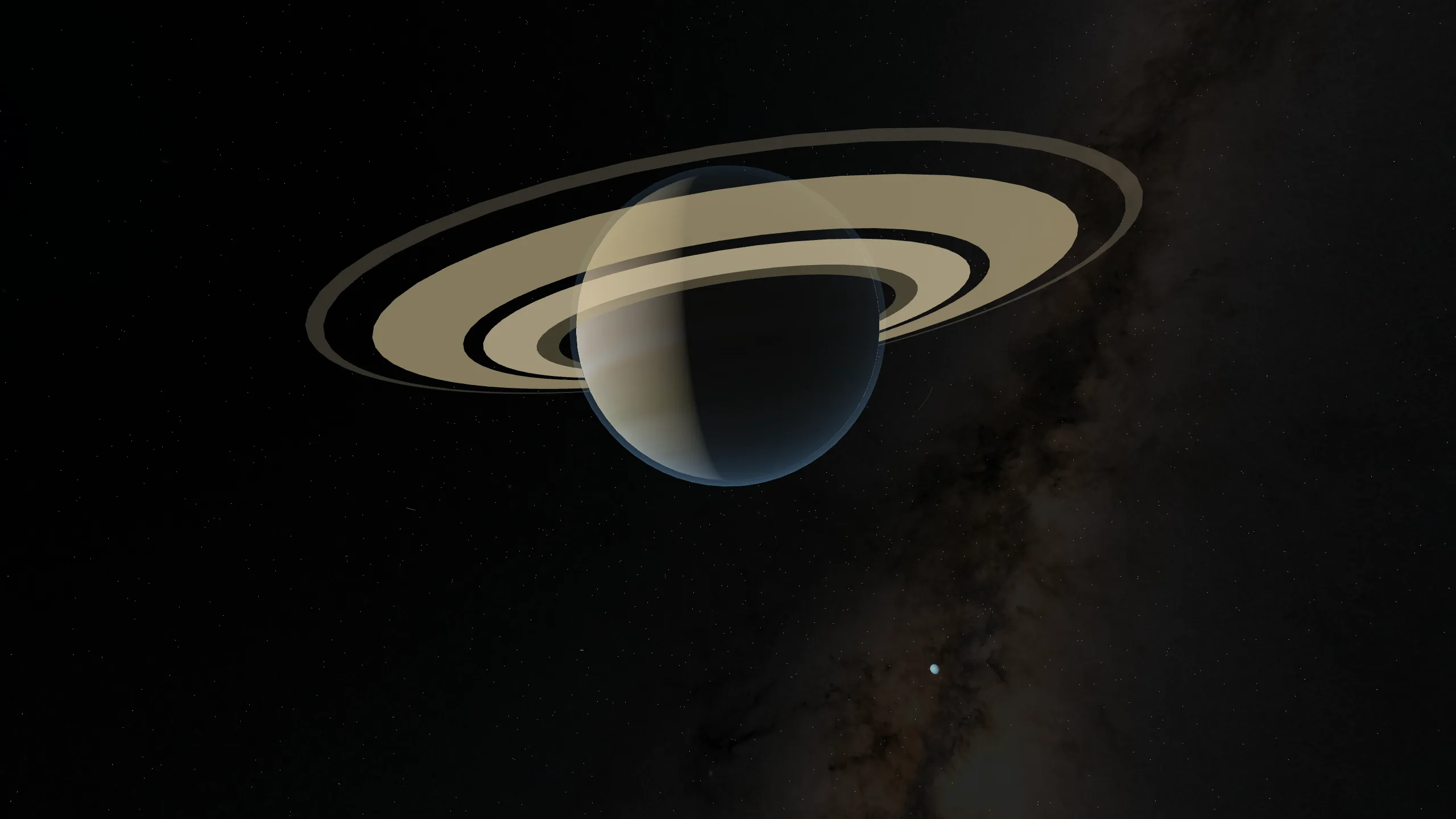
Luna Space Simulator
A space simulator with real gravity
Free to use in desktop and mobile browsers.
If you like Luna, please share it. I'd love to see what you build with it, so tag me @watermelonson on Instagram. I post about building software and robots there and on YouTube. If you want to work on a project together, have a look at my website.
Luna simulates the Solar System with full N-body gravity: every star, planet, and major moon pulls on every other. Drop a second Jupiter next to Earth, or crank up the Sun's mass, and every orbit responds in real time.
There's also Rocket Academy for building and staging rockets until one reaches orbit, and a scattering playground where mixing atmospheric gases shows why Earth's sky is blue and Mars's is butterscotch. You can visit Kepler-16, where a planet orbits two stars, or follow the lessons if you want the orbital mechanics explained.
Things to do in Luna
Stand on Io and look up at Jupiter
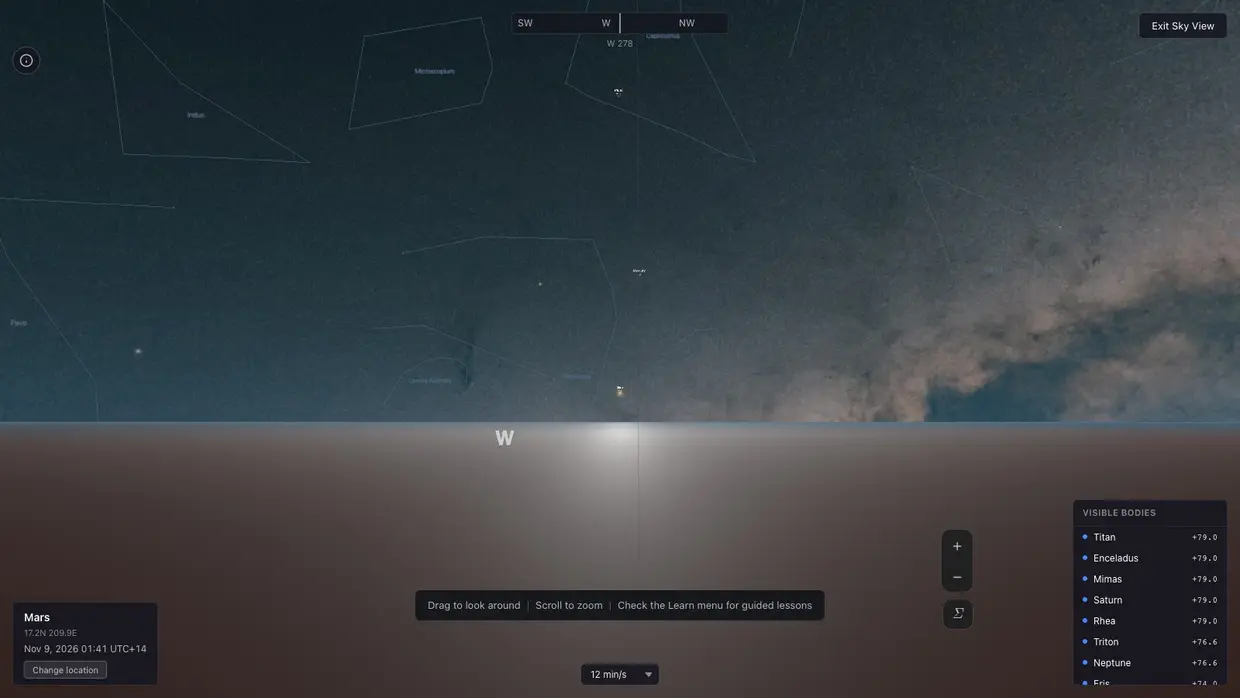
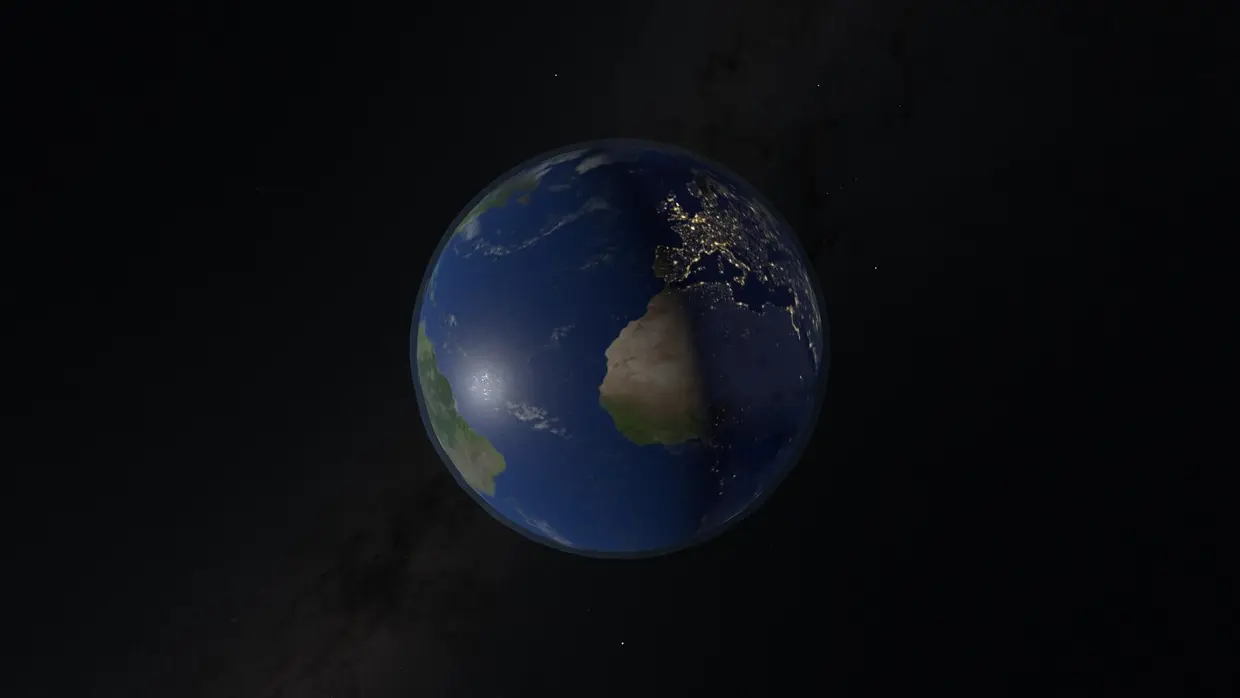
Pick any moon or planet, choose a spot on the globe and you are standing there. The stars, the constellations and the Milky Way sit where they really are. On Titan the sky is orange haze. On Mars, look for the blue glow around the setting Sun. Each sky comes from that world's own atmosphere and dust.
Move Earth and watch it change
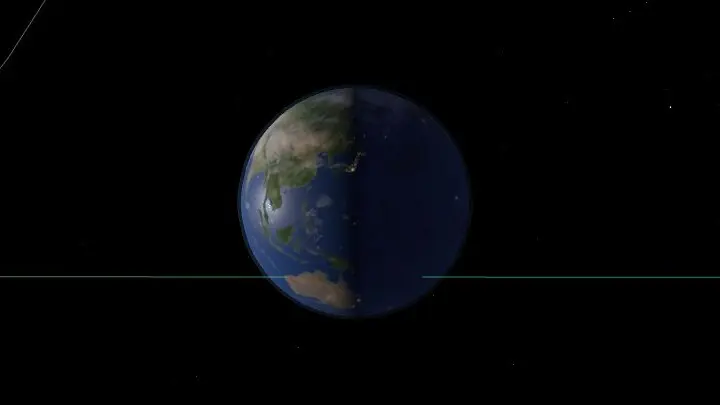
Pull Earth out past Mars and let time run, and the ice spreads down from the poles. Bring it back and the ice takes years to melt. Push it in past Venus instead and the oceans boil away. The lesson What If Earth Moved? walks you through all of it.
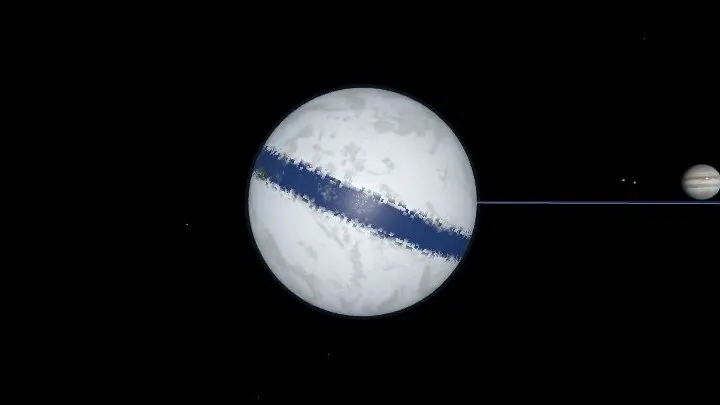
Put another Jupiter next to Earth
Spawn a planet near Earth and Earth's orbit changes. Give the Sun a companion star and find out which orbits survive. Keep piling mass onto a gas giant and at 13 Jupiter masses it becomes a brown dwarf. Keep going to about 80 and it lights up as a star.
Watch a black hole tear a star apart
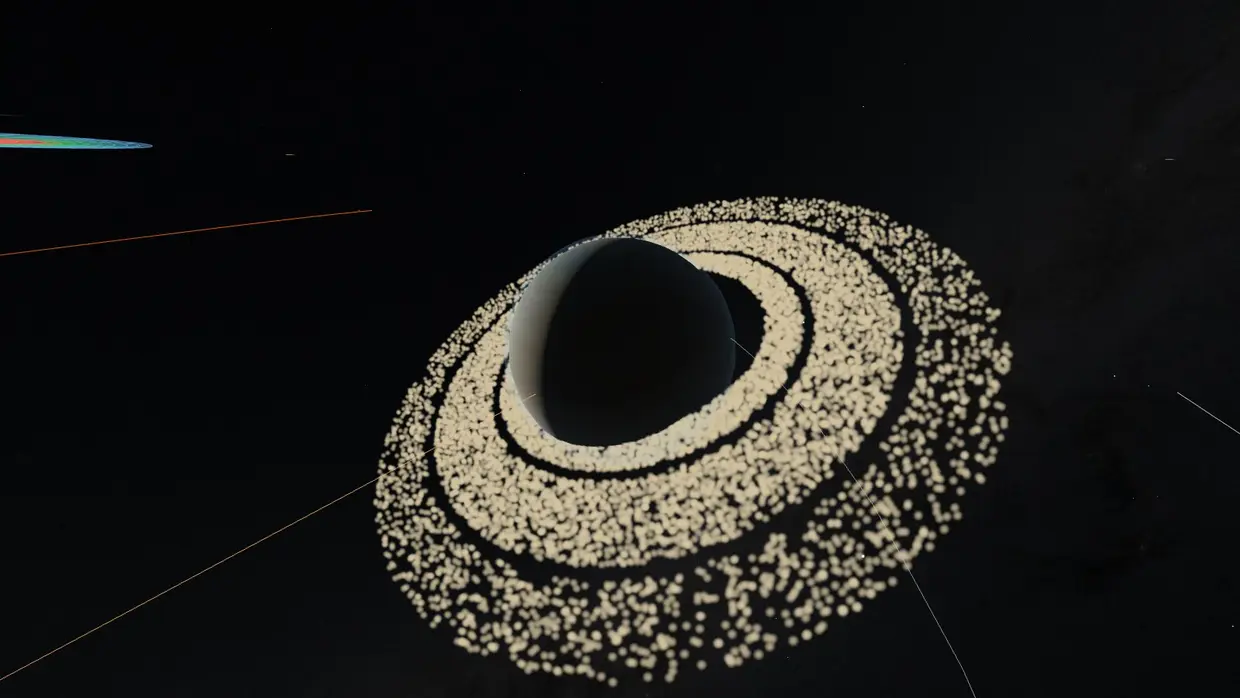
A red giant drifts too close to a black hole a million times heavier than the Sun. The near side gets pulled harder than the far side, the star stretches into a stream, and the light from that stream bends around the hole on its way to you. About half of it falls back and lights up the disk. You can also drop a black hole into the solar system and see which orbits survive.
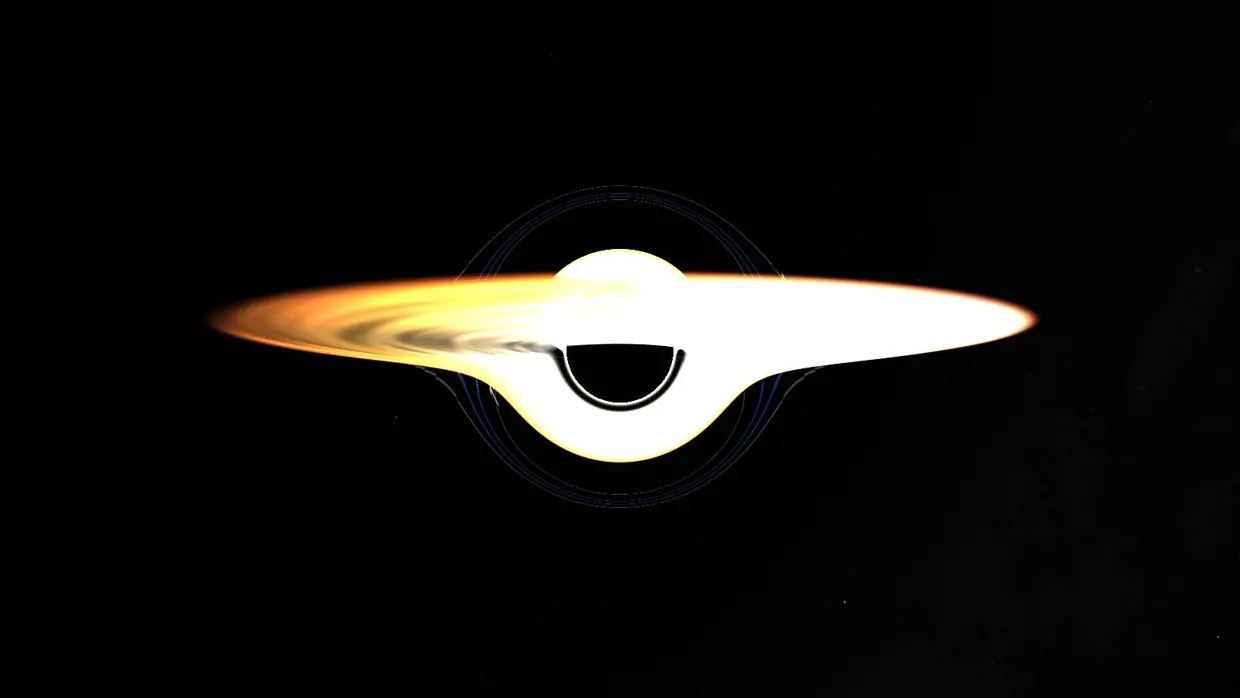
Fast-forward a star's life
Drag the Sun's age slider. It swells into a red giant past Earth's orbit, then shrinks to a white dwarf the size of Earth. Try a heavier star and it goes supernova. How heavy it starts decides what it leaves behind.
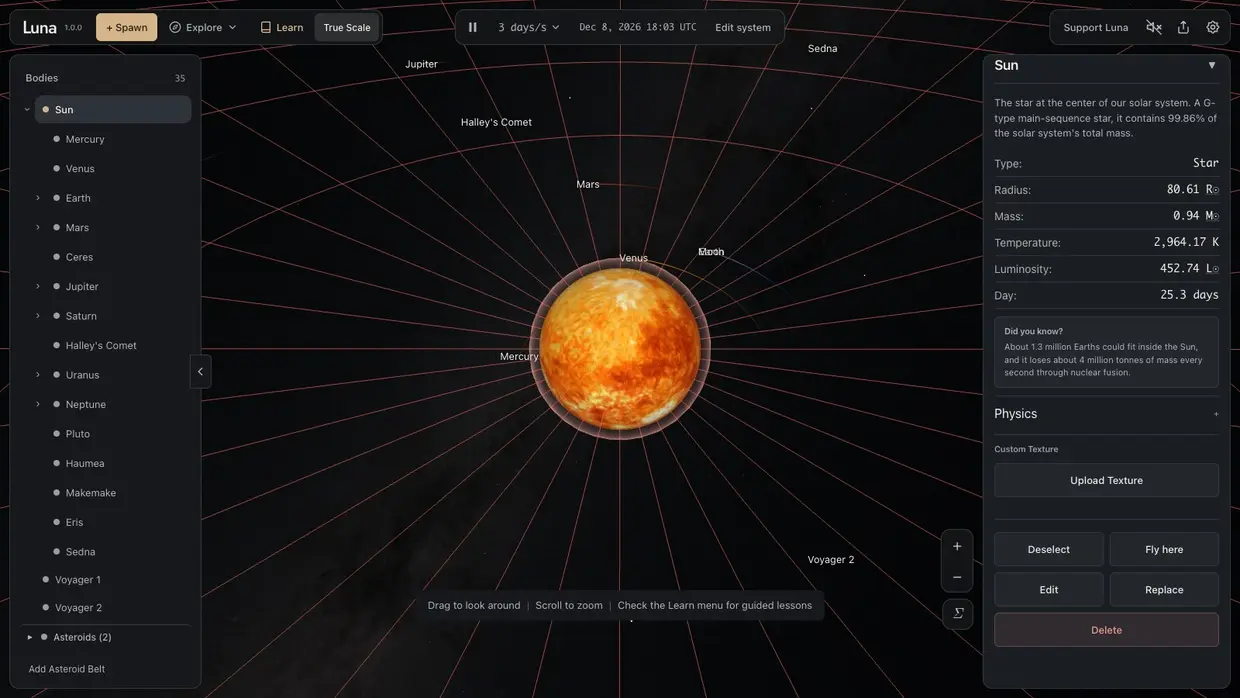
Visit other solar systems
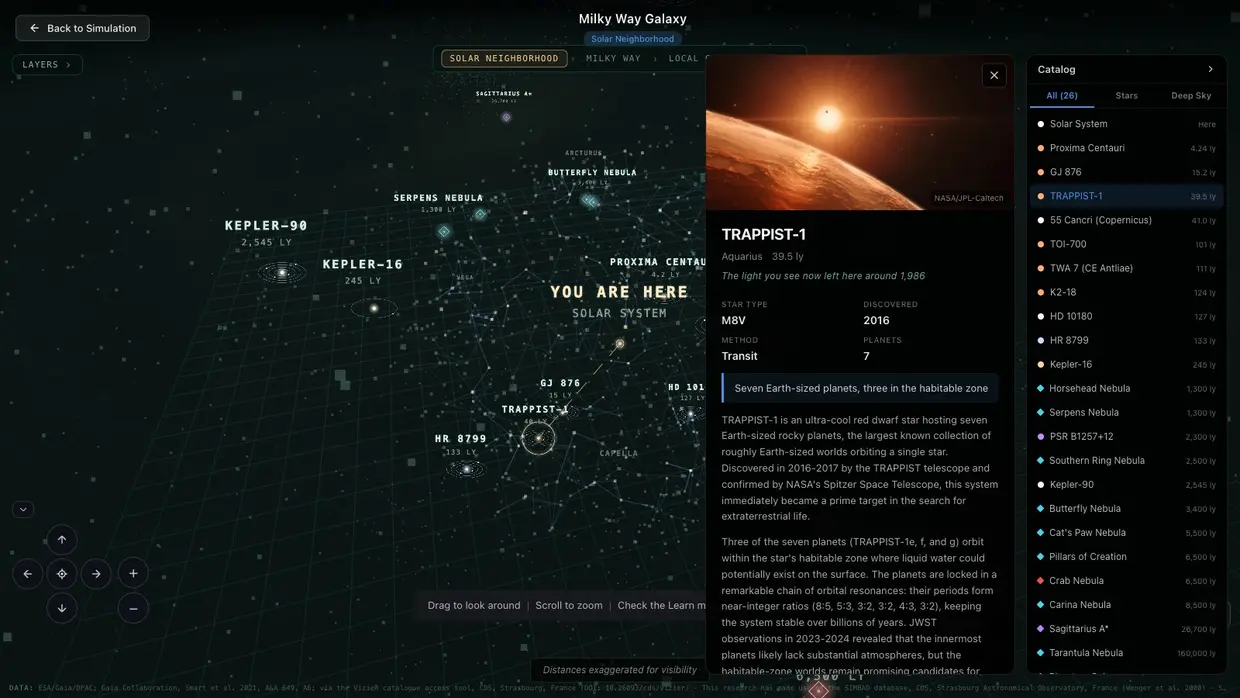
Zoom out past the nearby stars, the Milky Way and the Local Group. Thousands of catalogued exoplanet host stars sit on the map. Pick one and visit a system built from its data, with estimates labelled. Kepler-16 has two suns. TRAPPIST-1 has seven planets packed closer than Mercury is to our Sun.
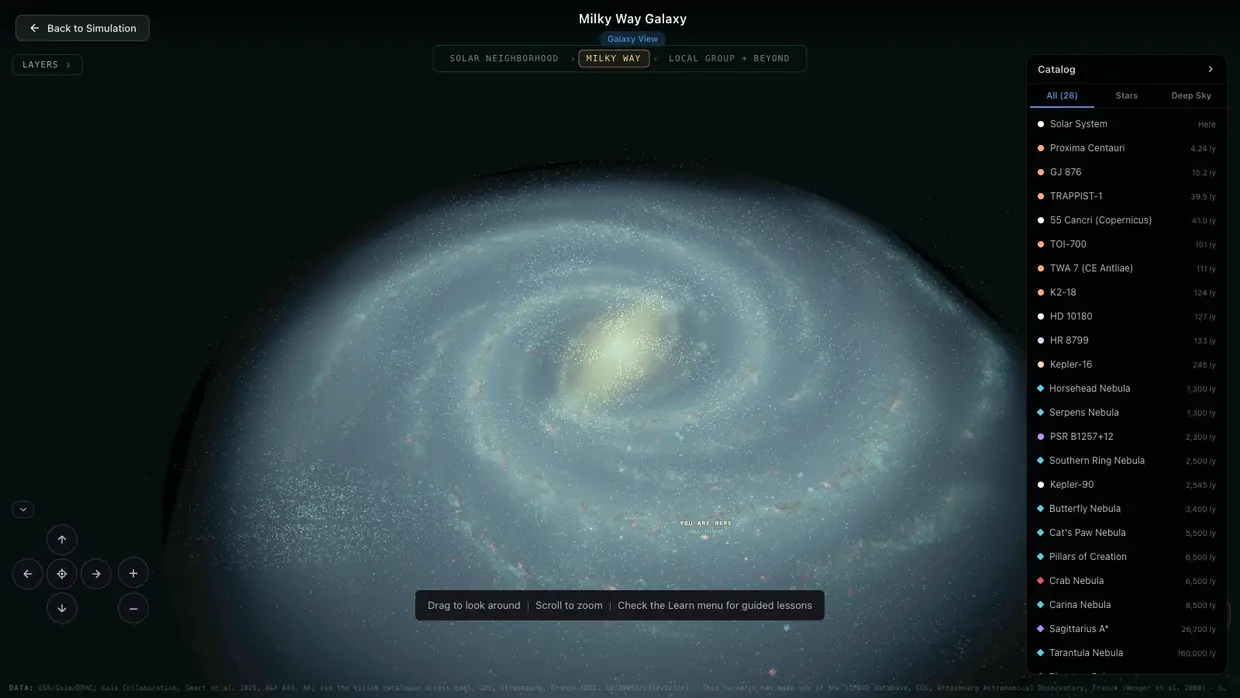
Build a rocket and land on the Moon
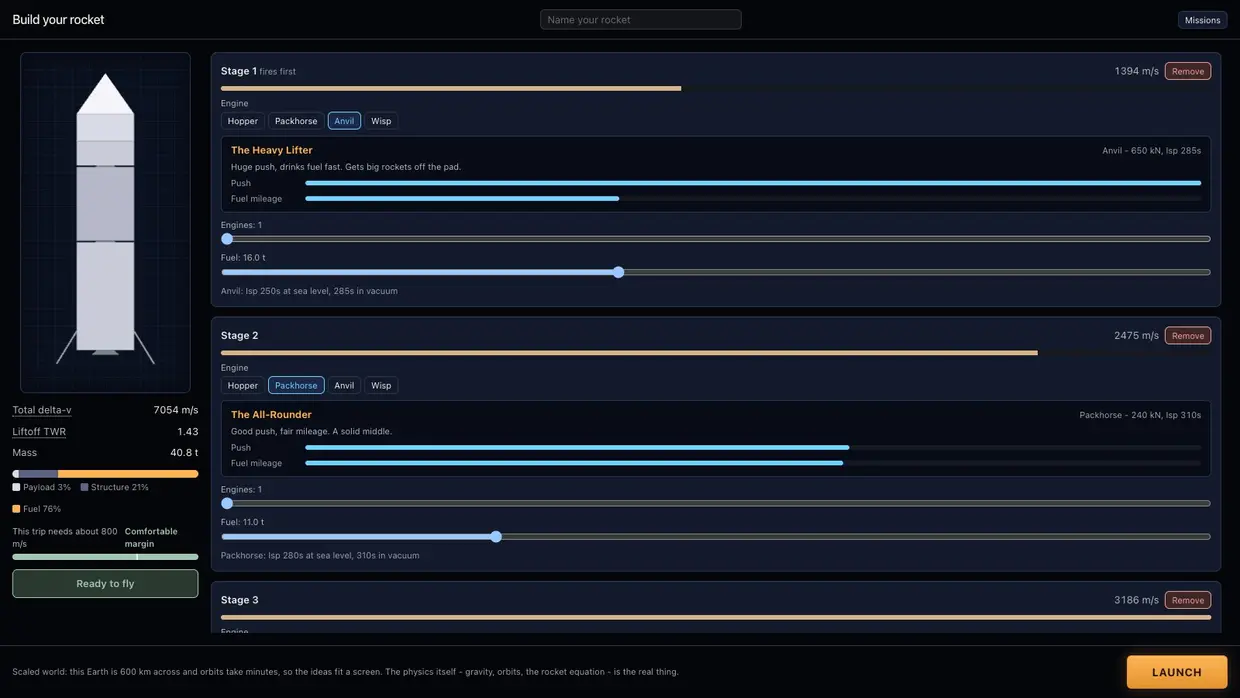
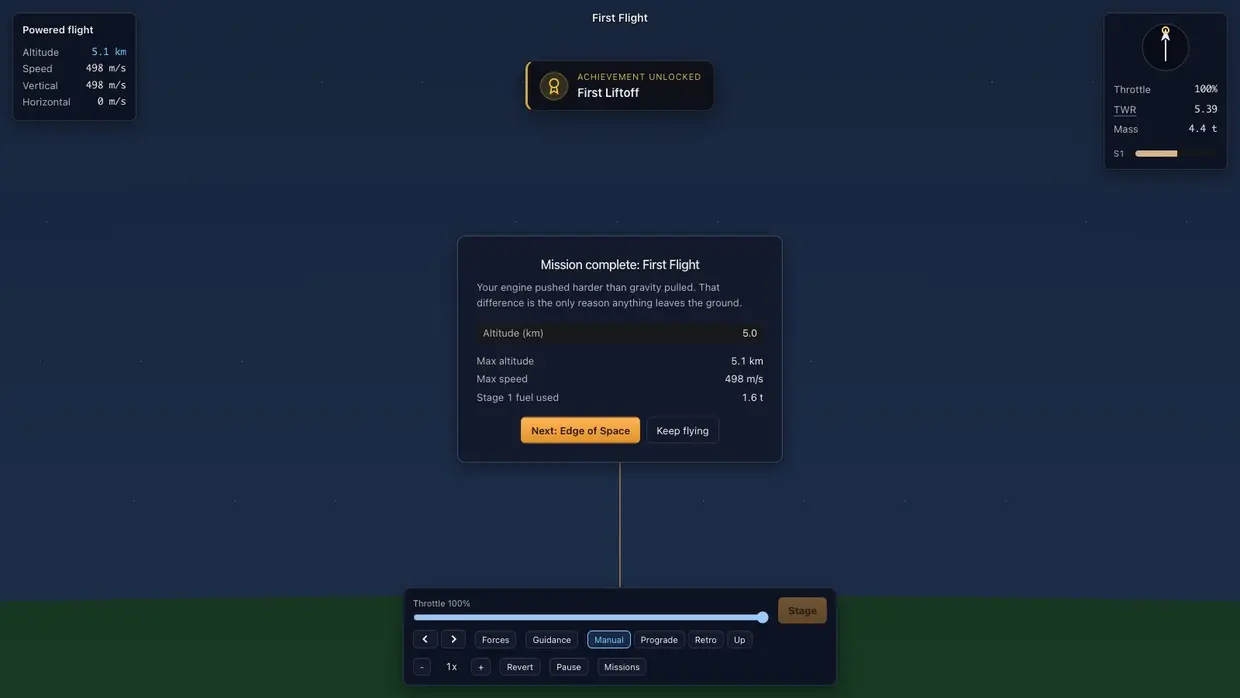
Rocket Academy (Beta) is a 2D mode with nine missions. Stack your stages, reach orbit, put up a satellite, then work your way to landing on the Moon. Fuel and staging follow the rocket equation, so every extra kilogram costs you.
Draw a cloud of dust and let gravity take over
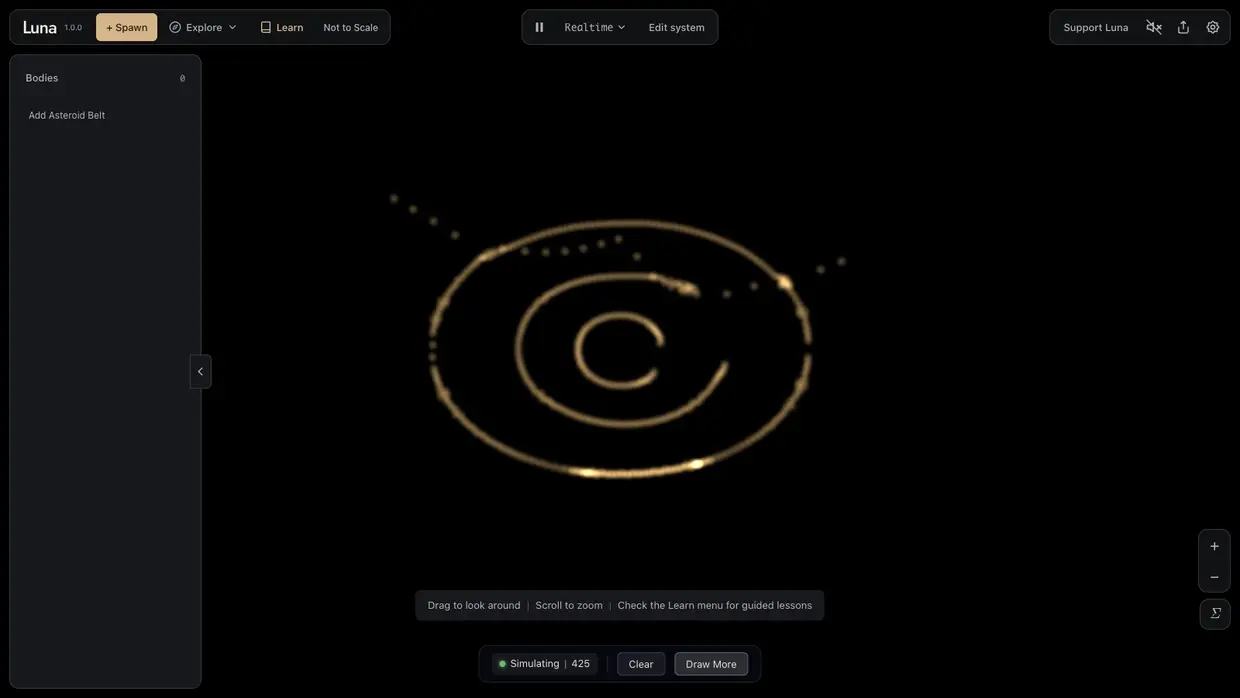
Paint dust with your finger or mouse, press play and the cloud starts clumping together.
Also in Luna
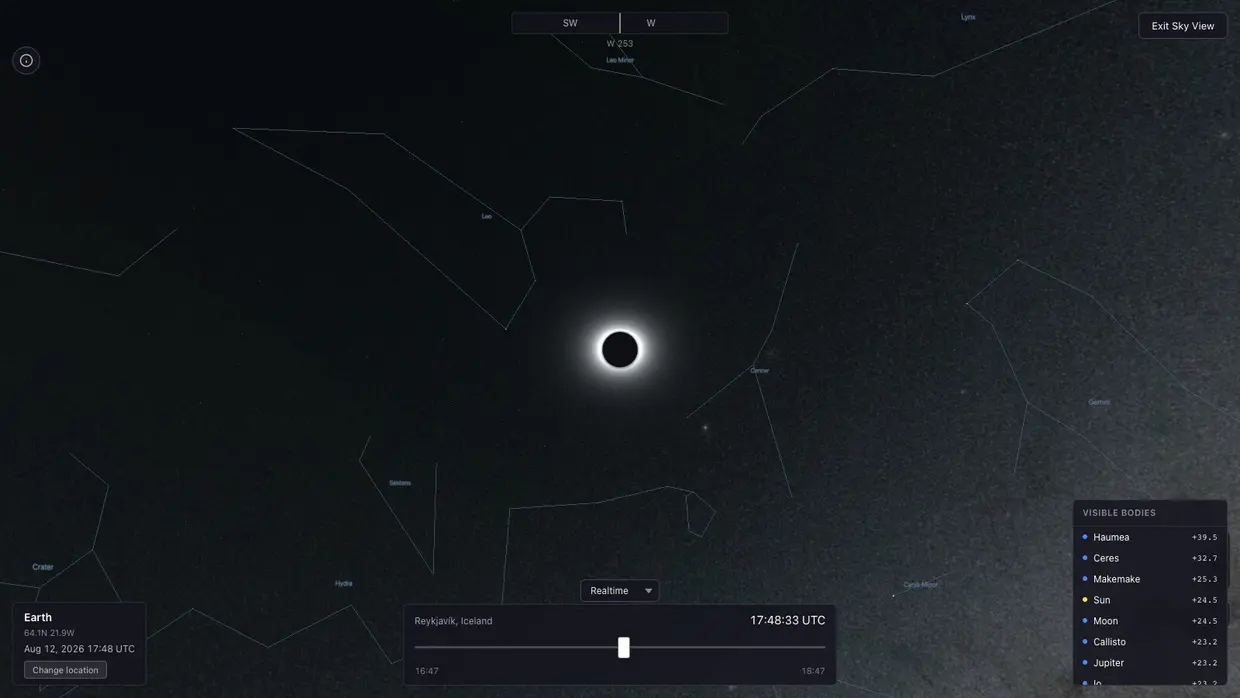
- The 12 August 2026 eclipse. Stand in totality in Reykjavik, then try Madrid, which gets 99.97 percent and still misses the corona. Read the eclipse guide.
- Jump through time. Go a thousand years back or forward and the planets move to where the orbit model puts them.
- True scale. One button shows the solar system at its real proportions, where the planets almost disappear.
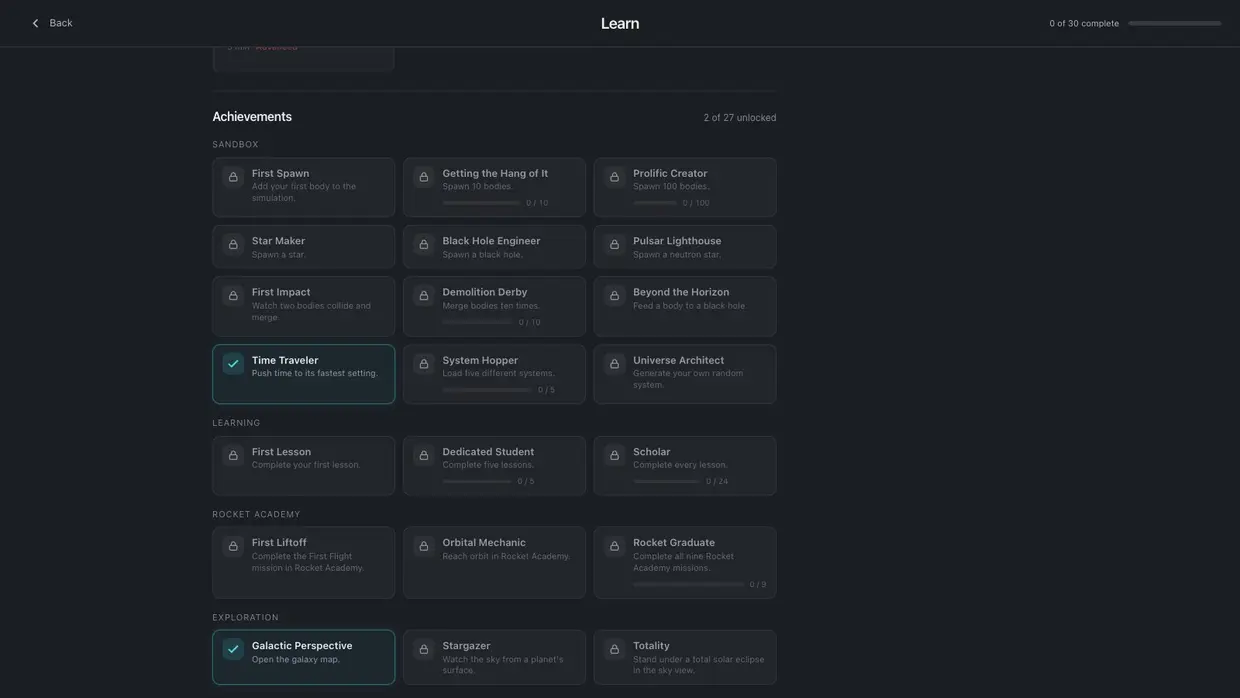
- Achievements. From your first spawn to your first black hole, plus a few you will have to find.
- Random systems. Generate a star system and see whether it holds together.
- Halley's Comet and both Voyagers are out there to find.
How the simulation works
The planets and major moons are integrated with a symplectic N-body method that keeps energy drift bounded over long runs. A close encounter can slingshot a moon away or capture a passing body. Planets render enlarged by default so you can find them; true-to-scale mode is one click away in the toolbar. Read more about how it was built.
Learn with it
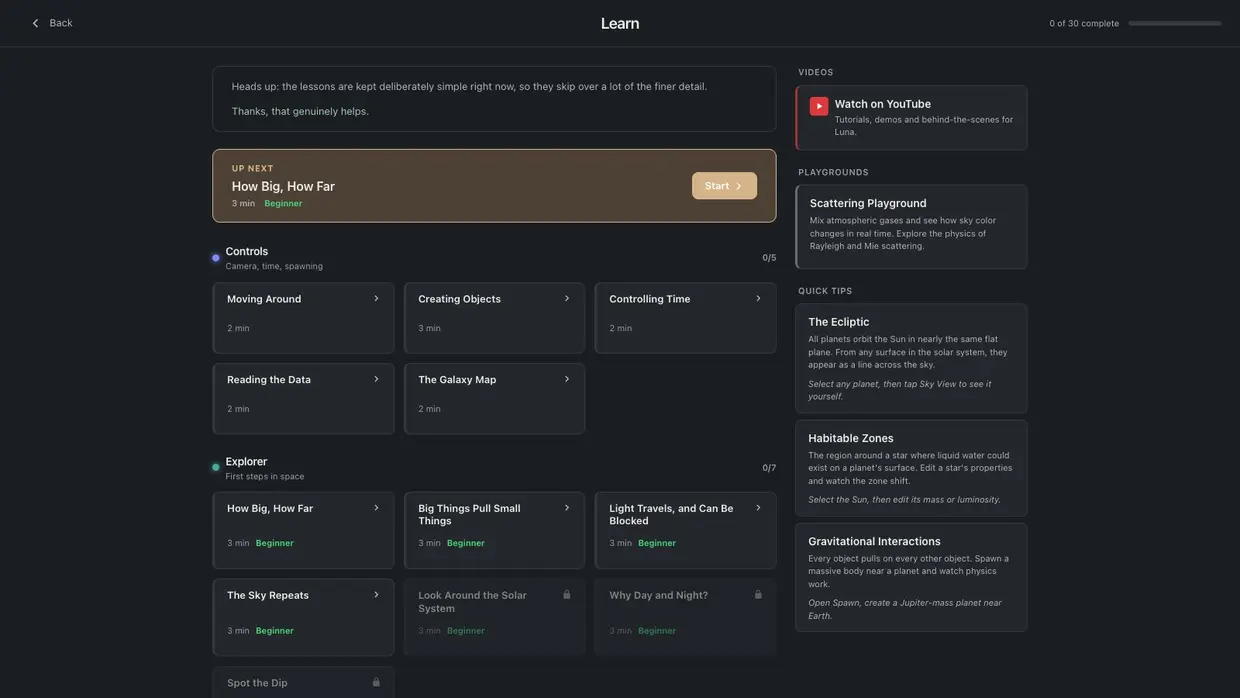
There are 28 guided lessons, and many ask you to make a prediction before you see what happens. They start with how orbits work and go on to seasons, eclipses, light and finding exoplanets. The 2026 eclipse page links printable classroom materials: a student investigation, a facilitator guide, and an answer key. Luna is available in English, German, Spanish, French, Turkish, Hebrew, and Indonesian.
Coming soon
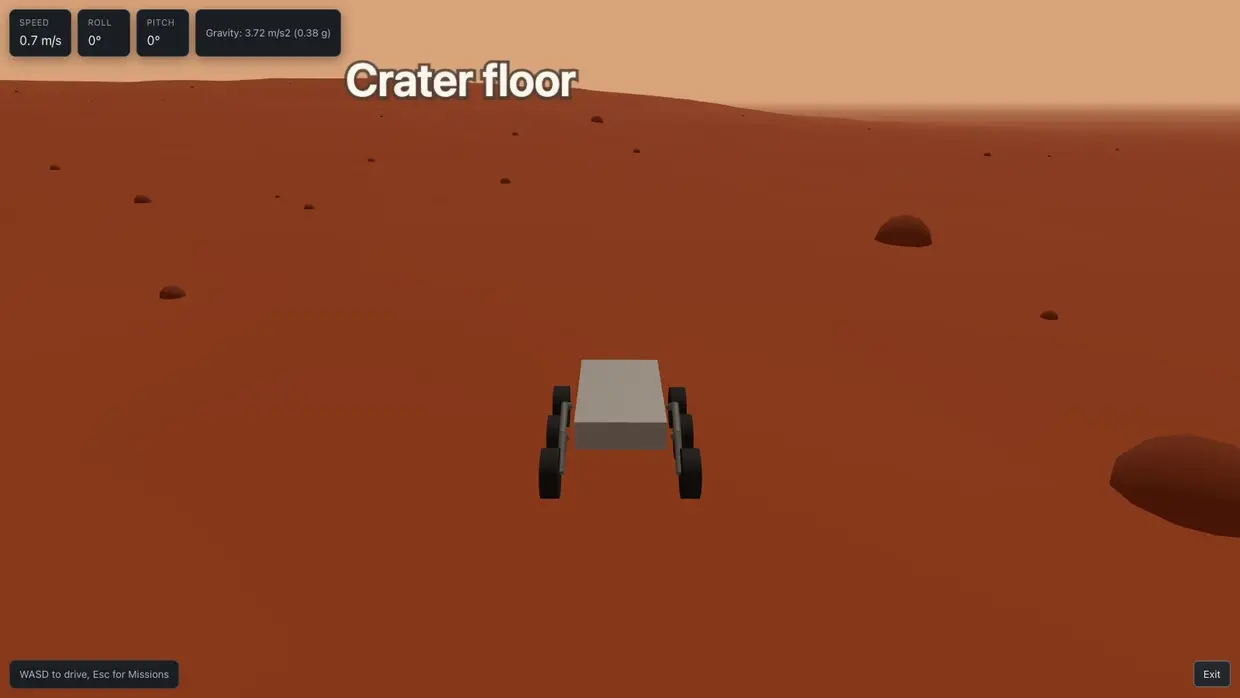
Robots: drive a rover on Mars
A six-wheeled rover with real suspension, in Mars gravity, on a 240 m patch of Jezero crater built from elevation data measured from orbit. The slopes you climb are the slopes that are there.
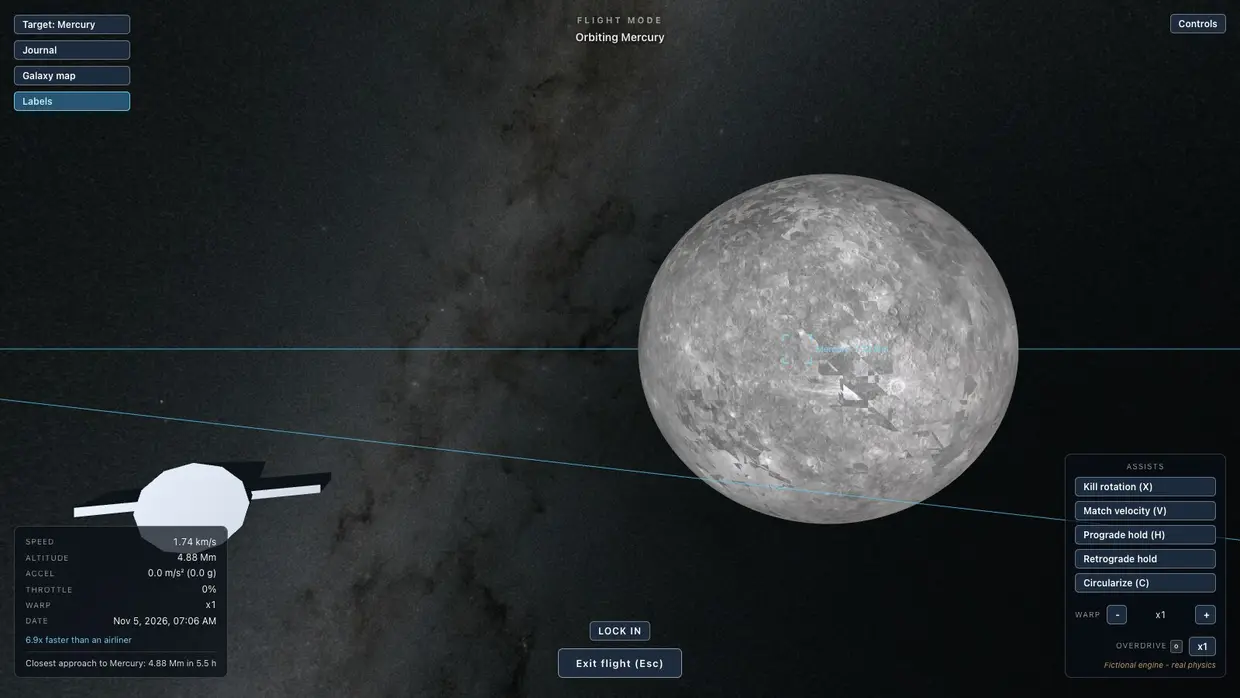
Free flight: fly your own ship
Pilot a ship through the same solar system, with time warp and assists that match speeds or circularize your orbit for you.
Luna is also coming to the App Store and Google Play.
Is the physics real?
Yes. Orbits come out of a live N-body integration, and a spawned body of meaningful mass always affects the rest of the system. The educational mini-modes state their simplifications in their own screens.
Does it run on phones?
Yes, in any modern mobile browser. Texture quality adapts to the device.
What does it cost?
Luna is free on the web. If you want to support development, there is a support button in the app.
News
October 2026
Luna 1.0.1: you can now let stuff hit your planets. Select a planet, tap Smash and pick a size. Black holes also have their own entry under Explore and now work on phones.
Luna 1.0 is out. It adds the system editor, where you can change a planet's mass, size or distance and run the result, achievements, the real night sky in Sky View, and climate that follows a planet's orbit.
July 31, 2026
Luna now opens with this page instead of dropping you straight into the simulator, so you can read what it is before you launch it. Updates about new features will be posted here. I also make videos on YouTube and write about my other projects at alikarpuzoglu.com.